
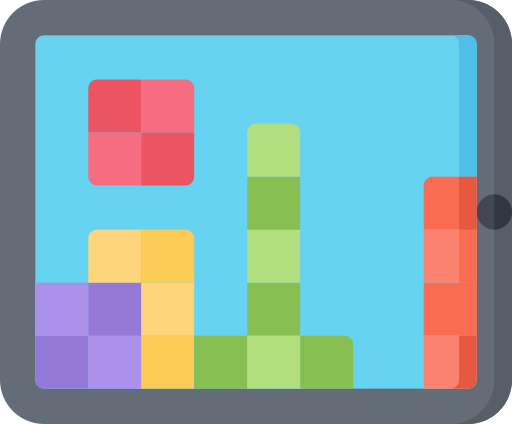




Puzzle Block is a relaxing grid-based puzzle game where you arrange colorful geometric pieces to complete each board. The objective is to place all the available blocks into the correct spaces, filling the grid without overlapping pieces or placing them outside the board.
The controls are simple, but finding the correct arrangement requires spatial reasoning and careful planning. Each piece has to fit into the available space, so a placement that looks useful at first may make the remaining pieces harder to position.
As you progress through the puzzles, you will encounter new arrangements that require you to think about the board as a whole rather than placing pieces randomly. With no timer or pressure, Puzzle Block lets you work through each challenge at your own pace while testing your logic and problem-solving skills.
How to Play
- Select a puzzle level: Choose the puzzle you want to solve.
- Examine the board: Look at the empty spaces and the available geometric blocks.
- Drag a block: Pick up a piece and drag it onto the board.
- Find the correct position: Place each block so that it fits within the grid.
- Avoid overlaps: Make sure pieces do not cover the same space or extend outside the board.
- Fill the grid: Continue arranging the available pieces until every required space is filled.
- Complete the puzzle: Finish the correct arrangement to complete the level and move on to further challenges.
Tips
- Study the entire board before placing pieces. Understanding the available space can help you avoid making an early placement that limits your options.
- Look for tight spaces first. Pieces or areas with fewer possible positions can be useful starting points when planning the arrangement.
- Consider the remaining pieces. Before placing a block, think about where the other shapes could fit afterward.
- Avoid filling large open areas too quickly. A large empty space may be needed for a particular piece later.
- Watch the edges and corners. Pieces that fit naturally into these areas can help reduce the number of possible arrangements.
- Keep overlaps in mind. Every piece needs its own space, so check the surrounding grid before confirming a placement.
- Use trial and adjustment. If the remaining pieces cannot fit, reconsider an earlier placement rather than forcing the final pieces into unsuitable spaces.
- Think about the complete pattern. The goal is not simply to place pieces, but to create an arrangement that fills the required board correctly.
Controls
PC: Drag and drop the blocks onto the board using the mouse.
Mobile: Drag the blocks onto the board using the touchscreen.
Game Features
- Grid-based puzzle gameplay: Arrange geometric pieces to fill the board.
- Spatial reasoning challenges: Find suitable positions for different shapes.
- Colorful geometric blocks: Solve puzzles using visually distinct pieces.
- Drag-and-drop controls: Move pieces easily on desktop and mobile devices.
- Increasingly challenging puzzles: Progress through different puzzle arrangements.
- Relaxed gameplay: Solve puzzles at your own pace without timers or time pressure.
Strategy Guide
Before placing your first piece, take a moment to inspect the entire board and the shapes available. Look for spaces that appear difficult to fill and consider which pieces might fit there. Starting with the most restrictive areas can help prevent a situation where a difficult shape is left with nowhere suitable to go.
As you place each block, think beyond its immediate position. A piece may fit perfectly in one area but leave an awkward gap that none of the remaining shapes can fill. Try to imagine how the next few pieces could fit before committing to a placement.
If you reach a point where the remaining pieces cannot complete the board, do not assume the puzzle is impossible. Instead, go back to an earlier placement and try positioning that piece differently. Small changes can create enough space for the remaining shapes.
For harder puzzles, focus on building the complete arrangement gradually rather than trying to solve every piece independently. Keep track of the empty spaces, the shapes still available, and how each placement changes the board. Since there is no timer, you can take the time needed to find a reliable solution.


Other Games
LEVEL UP
YOUR INBOX!